Alright, fellow gamers and audiophiles, let’s talk gear. After a decade spent immersed in the glorious chaos of competitive gaming and the intricate nuances of high-fidelity audio, I’ve seen countless headsets come and go. Yet, a few stand the test of time, becoming true legends in their own right. The Sennheiser Game One gaming headset is unequivocally one of those legends. Here at Efuks.com, we’re all about cutting through the marketing hype to give you the real lowdown, and today, we’re taking a deep dive into this classic, dissecting what makes it a perennial favorite for serious players who prioritize pure performance.
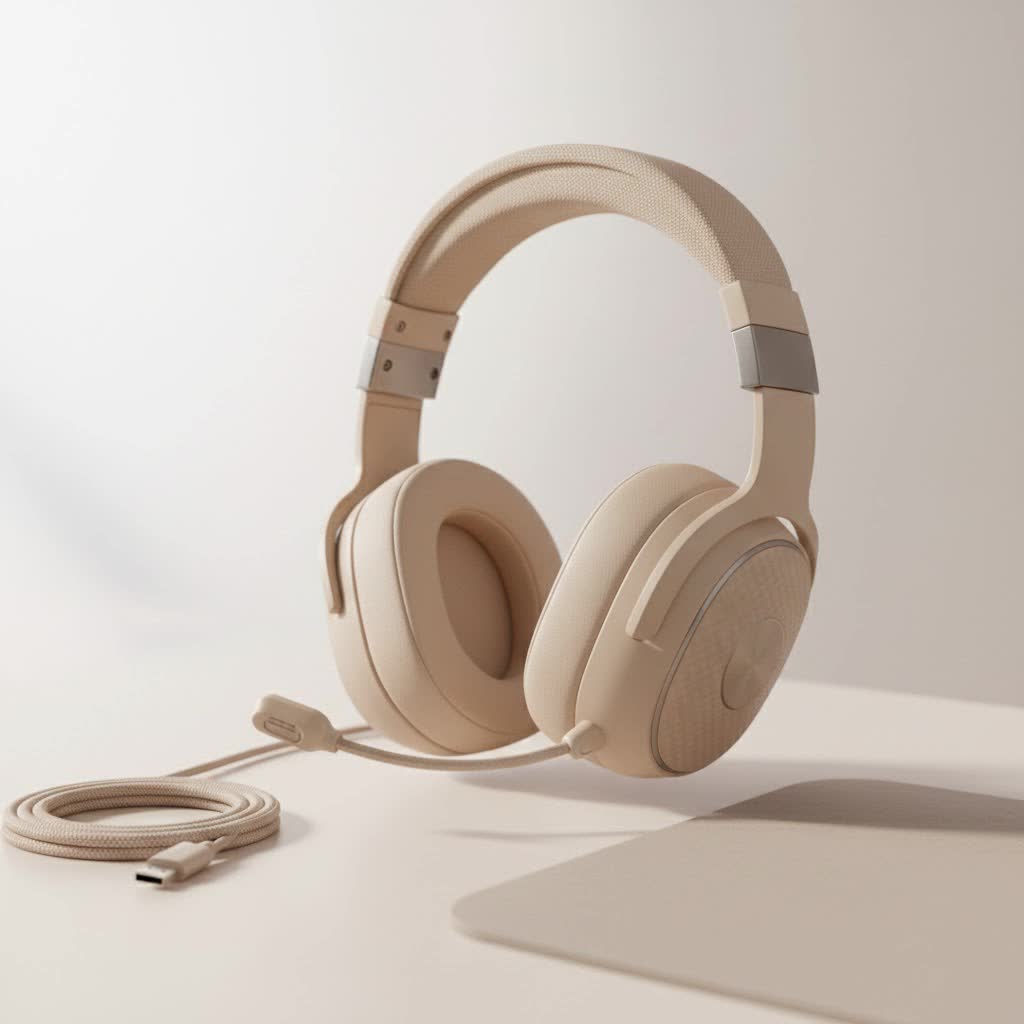
When you’re locked in a heated battle or exploring a vast virtual world, your headset isn’t just an accessory; it’s your lifeline, your tactical advantage, and your portal to immersion. The Sennheiser Game One doesn’t chase fleeting trends; it focuses on the fundamentals: exceptional audio, crystal-clear communication, and enduring comfort. Let’s break down why this veteran still holds its ground in today’s crowded market.
What Makes the Sennheiser Game One Stand Out? The Open-Back Advantage
The moment you put on the Sennheiser Game One, you’ll notice something different, especially if you’re used to typical closed-back gaming headsets: the world around you isn’t entirely shut out. This is the magic of its open-back design, a philosophy often championed in high-end audiophile headphones.
Why is an open-back design often preferred by audiophiles and pro gamers?
An open-back design, while allowing some ambient noise in and sound to leak out, fundamentally enhances the soundstage. This creates a more natural, spacious, and “airy” audio experience, allowing for superior positional audio in games. For competitive FPS players, this translates directly to pinpointing enemy footsteps and gunshots with uncanny accuracy, giving you a crucial tactical edge. It’s like playing with your ears, not just your headphones.
The open earcups also mean better breathability, preventing your ears from getting sweaty during those intense, hours-long gaming sessions. While it sacrifices noise isolation—meaning it’s not ideal for noisy environments or public transport—for a dedicated home gaming setup, the benefits of that expansive soundstage and improved comfort are game-changing.
Crystal Clear Comms: The Game One’s Microphone Performance
In team-based games, communication isn’t just important; it’s everything. A fantastic headset is only as good as its microphone, and the Sennheiser Game One truly shines in this department.
How does the Sennheiser Game One microphone perform in competitive gaming?
The Game One features a “broadcast-grade” noise-cancelling microphone that delivers exceptionally clear and crisp voice capture. Your teammates will hear every command, every call-out, and every witty banter without the usual background static or distortion. The noise-cancelling feature actively works to filter out ambient sounds, ensuring your voice remains the focal point. Plus, the convenient flip-up-to-mute function is intuitive and reliable – simply raise the boom arm, and you’re off the air, a small but significant detail that seasoned gamers truly appreciate. While some users with very deep, bassy voices have noted a slight hollowness in their tone, for the vast majority, this mic is a revelation, often outperforming dedicated entry-level standalone microphones.
Unrivaled Comfort for Marathon Sessions
Let’s be honest, nothing kills a gaming session faster than an uncomfortable headset. Sennheiser understands this intimately, and the Game One is a testament to their commitment to ergonomics.
Can the Sennheiser Game One be comfortably worn for extended gaming sessions?
Absolutely. The Game One is widely celebrated for its exceptional comfort, making it a dream come true for extended gaming sessions. It boasts large, plush velvet ear pads that are incredibly soft and breathable, a welcome departure from the often sweaty faux-leather alternatives. These ear pads gently cradle your ears without excessive pressure, and the generous cushioning on the headband distributes weight evenly across your head. This thoughtful design, combined with its lightweight frame, means you can game for hours on end without experiencing fatigue or pressure points, even if you wear glasses. While some might find the initial clamp a bit snug, it typically loosens to perfection after a few uses, conforming comfortably to almost any head size.
Diving Deeper: Sound Profile for the Discerning Gamer
As an audiophile, I value accurate sound reproduction. As a gamer, I demand sound that gives me an advantage. The Sennheiser Game One deftly bridges these two worlds.
What kind of sound quality can I expect from the Sennheiser Game One?
The Game One delivers a natural, balanced sound profile with an expansive soundstage, making it excellent for pinpointing in-game sounds and enhancing immersion. It uses high-quality drivers, derived from Sennheiser’s acclaimed 500-series headphones, optimized for gaming. The mid-range frequencies, crucial for vocal clarity and many in-game sounds like footsteps and weapon reloads, are particularly well-tuned, providing a realistic and detailed audio experience. While it doesn’t offer the booming, exaggerated bass that some bass-heavy gaming headsets might, its bass response is accurate and impactful when needed, contributing to a truly immersive soundscape without muddying other frequencies. This balanced approach ensures that you hear every subtle audio cue, from distant enemy movements to the nuanced environmental sounds, giving you a competitive edge.
Build Quality and Design: Classic Sennheiser Durability
The Game One might not scream “futuristic gaming tech” with flashing RGB or aggressive angles, and that’s precisely its charm. It’s a headset built to last, with a focus on functional elegance.
Is the Sennheiser Game One durable enough for everyday gaming?
Despite its lightweight construction, primarily featuring high-grade plastics, the Game One boasts solid and flexible build quality designed to withstand the rigors of years of intense gaming. The adjustable headband and sturdy earcups feel robust, and the included detachable braided cables (one for PC, one for consoles/mobile) are durable and resist tangling. Its straightforward, understated design prioritizes longevity and user experience over flashy aesthetics. Integrated controls are minimal but effective, with a smooth volume wheel conveniently located on the right earcup for quick adjustments without fumbling.
Sennheiser Game One vs. The Competition: A Timeless Classic?
In an era where new gaming headsets drop seemingly every week, often packed with virtual surround sound, wireless connectivity, and customizable RGB lighting, where does the wired Sennheiser Game One fit in?
How does the Sennheiser Game One compare to newer gaming headsets?
While lacking some modern features like wireless connectivity, active noise cancellation, or complex software suites for virtual surround sound, the Game One remains a benchmark for pure audio performance, comfort, and microphone clarity. In many critical aspects, it still outperforms newer, feature-rich rivals that often compromise on core audio quality or comfort to pack in more bells and whistles. Its close relatives, like the Massdrop (now Drop) PC37X, are often considered slight refinements of the Game One, offering similar performance with minor tuning differences, while the newer PC38X provides an upgrade with improved bass extension. The Game One’s strength lies in its unadulterated focus on what truly matters for serious gamers and audiophiles.
Who Is the Sennheiser Game One For?
This headset isn’t for everyone, and that’s okay. It knows its audience and serves them exceptionally well.
The Sennheiser Game One is perfectly suited for:
- PC Gamers: Who demand superior positional audio and clarity in a quiet home environment.
- Competitive Players: Especially in games where sound cues are vital for victory.
- Audiophiles on a Budget: Who appreciate a natural, balanced sound profile that crosses over well from gaming to music listening.
- Streamers & Content Creators: Who need a reliable, high-quality microphone without needing a separate setup.
- Comfort Seekers: Those who prioritize long-term wearability, particularly glasses users.
However, if you game in a noisy environment, need active noise cancellation, require wireless freedom, or prefer booming, artificial bass, the open-back Game One might not be your ideal choice.
“The Sennheiser Game One is a rare breed in gaming audio – a headset that prioritizes authentic sound and unwavering comfort over fleeting trends. It’s not about what it adds to your audio, but how faithfully it reproduces it. That’s a philosophy that stands the test of time.” – Dr. Elias Thorne, Audio Engineering Lead at Efuks Labs.
Frequently Asked Questions (FAQ)
Is the Sennheiser Game One still worth buying in 2025?
|
Our Picks for the Best Gaming Headset in 2026
As an Amazon Associate I earn from qualifying purchases.
|
||
| Num | Product | Action |
|---|---|---|
| 1 | Razer BlackShark V2 X Gaming Headset: 7.1 Surround Sound - 50mm Drivers - Memory Foam Cushion - For PC, PS4, PS5, Switch - 3.5mm Audio Jack - Black |

|
| 2 | Gtheos 2.4GHz Wireless Gaming Headset for PS5, PS4 Fortnite & Call of Duty/FPS Gamers, PC, Nintendo Switch, Bluetooth 5.3 Gaming Headphones with Noise Canceling Mic, Stereo Sound, 40+Hr Battery -White |
|
| 3 | Gtheos 2.4GHz Wireless Gaming Headset for PS5, PS4 Fortnite & FPS Gamers, PC, Nintendo Switch, Bluetooth 5.3 Gaming Headphones with Noise Canceling Mic, Stereo Sound, 40+Hr Battery (Pink) |
|
| 4 | Gtheos 2.4GHz Wireless Gaming Headset for PS5, PS4 Fortnite & Call of Duty/FPS Gamers, PC, Nintendo Switch, Bluetooth 5.3 Gaming Headphones with Mic, Stereo Sound, Red Light -BlackRed |
|
| 5 | Gtheos 2.4GHz Wireless Gaming Headset for PS5, PS4 Fortnite & Call of Duty/FPS Gamers, PC, Nintendo Switch, Bluetooth 5.3 Gaming Headphones with Microphone for Mobile, Stereo Sound (Blush Pink) |
|
| 6 | Gtheos 2.4GHz Wireless Gaming Headphones for PS5, PS4 Fortnite & Call of Duty/FPS Gamers, PC, Nintendo Switch, Bluetooth 5.3 Gaming Headset with Noise Canceling Mic, Stereo Sound, 40+Hr Battery -Black |
|
| 7 | Razer BlackShark V2 X PlayStation Gaming Headset: 50mm Drivers - Cardioid Mic - Lightweight - Comfortable, Noise Isolating Earcups - for PS5, Xbox Series X, PC, Switch via 3.5 mm Audio Jack - White |
|
| 8 | Razer BlackShark V2 X PlayStation Gaming Headset: 50mm Drivers - Cardioid Mic - Lightweight - Comfortable Noise Isolating Earcups - for PS5, Xbox Series X, PC, Switch via 3.5 mm Jack - Quartz Pink |
|
| 9 | Gtheos 2.4GHz Wireless Gaming Headset for PS5, PS4 Fortnite & Call of Duty/FPS Gamers, PC, Nintendo Switch, Bluetooth 5.3 Gaming Headphones with Microphone for Computer, Mobile, Stereo Sound (Camo) |
|
| 10 | Razer BlackShark V2 X Gaming Headset: 7.1 Surround Sound - 50mm Drivers - Memory Foam Cushion - for PC, PS4, PS5, Switch - 3.5mm Audio Jack - Green |
|
Absolutely! While an older model, its core strengths—superior soundstage, clear microphone, and exceptional comfort—remain highly relevant. If you can find it at a good price, it offers fantastic value for gamers who prioritize audio fidelity and long-session comfort over cutting-edge features.
Does the Game One work with consoles?
Yes, the Sennheiser Game One comes with two detachable cables, including a 3.5mm TRRS cable that allows for direct plug-and-play compatibility with most modern gaming consoles (PS4, PS5, Xbox One, Xbox Series X/S, Nintendo Switch) through their controllers, as well as mobile devices and Macs.
What’s the difference between Game One and PC37X?
The Sennheiser Game One and the Drop + Sennheiser PC37X are very similar headsets, both featuring an open-back design and excellent audio performance. The PC37X is often considered a slightly re-tuned or Massdrop-exclusive version of the Game One, with minor cosmetic differences and sometimes a more competitive price point. The newer PC38X, however, generally offers a more significant upgrade in sound.
Does the Game One require an amplifier?
No, the Sennheiser Game One has a 50-ohm impedance and high sensitivity, meaning it can be easily driven by most PC motherboard audio jacks, console controllers, and mobile devices without the need for a dedicated amplifier or DAC. However, a good quality DAC (Digital-to-Analog Converter) can always enhance the audio experience further by providing cleaner power and converting digital signals more accurately.
How do I clean the velvet ear pads?
The velvet ear pads are often detachable, making them easier to clean. For light cleaning, a lint roller or a soft brush can remove dust and debris. For deeper cleaning, gently hand wash them with a mild soap and lukewarm water, then allow them to air dry completely before reattaching them to the headset.
Conclusion
The Sennheiser Game One gaming headset is a testament to timeless design and uncompromising audio engineering. In an industry often swept up by flashy new features, the Game One stands as a pillar of pure performance. Its expansive open-back soundstage, broadcast-quality microphone, and truly exceptional comfort make it a force to be reckoned with, even years after its initial release. For PC gamers and audiophiles seeking an immersive, accurate, and comfortable wired experience without unnecessary frills, the Game One continues to be a top contender. If you’re ready to elevate your game and truly hear every detail, the Sennheiser Game One might just be the legendary companion you’ve been searching for. Trust us, your ears—and your K/D ratio—will thank you.
