Alright, fellow gamers and audiophiles, let’s cut to the chase. In the fast-paced world of competitive gaming, your gear isn’t just an accessory; it’s a critical component of your success. And when it comes to immersion, communication, and tactical advantage, few pieces of equipment are as vital as a top-tier gaming headset with microphone. As someone who’s spent over a decade deep in the trenches of virtual battlefields and countless hours dissecting audio hardware for Efuks.com, I can tell you that picking the right headset isn’t just about flashy RGB or the latest trend; it’s about understanding what truly elevates your game.
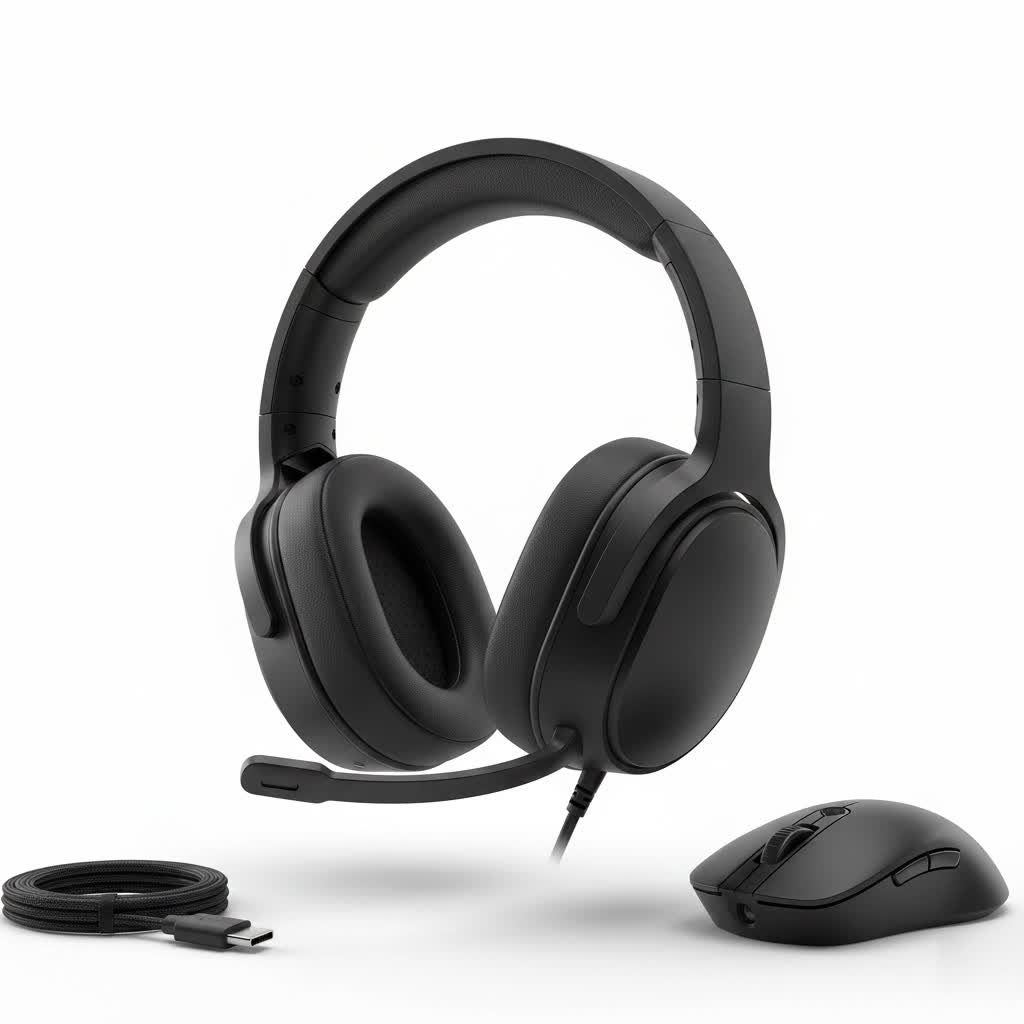
Forget those flimsy earbuds or built-in laptop mics that make you sound like you’re broadcasting from a tin can. A dedicated gaming headset with microphone is your lifeline to your squad, your ears to every crucial in-game sound cue, and your key to an immersive experience that generic audio simply can’t deliver. We’re not just listening to sounds; we’re experiencing the world the developers intended.
Why a Dedicated Gaming Headset with Microphone Matters
Why bother with a specialized gaming headset with microphone when any old headphones might do? The answer is simple: precision and clarity. In a competitive match, every split-second decision hinges on clear communication and accurate sound perception.
What’s the Big Deal About Specialized Gaming Audio?
|
Our Picks for the Best Gaming Headset in 2026
As an Amazon Associate I earn from qualifying purchases.
|
||
| Num | Product | Action |
|---|---|---|
| 1 | Gtheos 2.4GHz Wireless Gaming Headset for PS5, PS4 Fortnite & Call of Duty/FPS Gamers, PC, Nintendo Switch, Bluetooth 5.3 Gaming Headphones with Microphone for Mobile, Stereo Sound (Blush Pink) |

|
| 2 | Gtheos 2.4GHz Wireless Gaming Headset for PS5, PS4 Fortnite & Call of Duty/FPS Gamers, PC, Nintendo Switch, Bluetooth 5.3 Gaming Headphones with Noise Canceling Mic, Stereo Sound, 40+Hr Battery -White |
|
| 3 | Gtheos 2.4GHz Wireless Gaming Headset for PS5, PS4 Fortnite & Call of Duty/FPS Gamers, PC, Nintendo Switch, Bluetooth 5.3 Gaming Headphones with Mic, Stereo Sound, Red Light -BlackRed |
|
| 4 | Gtheos 2.4GHz Wireless Gaming Headset for PS5, PS4 Fortnite & Call of Duty/FPS Gamers, PC, Nintendo Switch, Bluetooth 5.3 Gaming Headphones with Microphone for Computer, Mobile, Stereo Sound (Camo) |
|
| 5 | Razer BlackShark V2 X Gaming Headset: 7.1 Surround Sound - 50mm Drivers - Memory Foam Cushion - for PC, PS4, PS5, Switch - 3.5mm Audio Jack - Green |
|
| 6 | Razer BlackShark V2 X PlayStation Gaming Headset: 50mm Drivers - Cardioid Mic - Lightweight - Comfortable, Noise Isolating Earcups - for PS5, Xbox Series X, PC, Switch via 3.5 mm Audio Jack - White |
|
| 7 | Gtheos 2.4GHz Wireless Gaming Headset for PS5, PS4 Fortnite & FPS Gamers, PC, Nintendo Switch, Bluetooth 5.3 Gaming Headphones with Noise Canceling Mic, Stereo Sound, 40+Hr Battery (Pink) |
|
| 8 | Razer BlackShark V2 X PlayStation Gaming Headset: 50mm Drivers - Cardioid Mic - Lightweight - Comfortable Noise Isolating Earcups - for PS5, Xbox Series X, PC, Switch via 3.5 mm Jack - Quartz Pink |
|
| 9 | Gtheos 2.4GHz Wireless Gaming Headphones for PS5, PS4 Fortnite & Call of Duty/FPS Gamers, PC, Nintendo Switch, Bluetooth 5.3 Gaming Headset with Noise Canceling Mic, Stereo Sound, 40+Hr Battery -Black |
|
| 10 | Razer BlackShark V2 X Gaming Headset: 7.1 Surround Sound - 50mm Drivers - Memory Foam Cushion - For PC, PS4, PS5, Switch - 3.5mm Audio Jack - Black |
|
Specialized gaming audio is engineered to give you an unfair advantage. It’s not just about loud explosions; it’s about subtle footsteps, distant reloading sounds, and the directionality of enemy fire. A good gaming headset provides a soundstage that allows you to pinpoint threats with uncanny accuracy, transforming passive listening into active spatial awareness. It’s like having a sixth sense in-game, letting you react before your opponents even know you’re there.
Why Is a Quality Microphone Essential for Team Play?
Imagine calling out a flanking enemy, only for your teammates to hear static or, worse, your mechanical keyboard clacking louder than your voice. A quality microphone ensures your critical callouts are heard crystal clear, free from distortion and background noise. It’s the difference between a perfectly executed team push and a frustrated wipe. Your voice becomes a weapon, and a great gaming headset with microphone arms you properly.
Decoding the Different Types of Gaming Headsets
The market is awash with options, but most gaming headsets fall into a few core categories, each with its own set of strengths and weaknesses.
Wired Wonders: Reliable & Pure
Wired gaming headsets are the old faithfuls for a reason. They offer zero latency, which is absolutely critical for competitive players where every millisecond counts. You just plug and play, never worrying about battery life or connection drops. They also tend to be more budget-friendly, offering excellent audio and mic quality for your buck. The downside, of course, is the cable – it can restrict movement and clutter your setup. But for pure, unadulterated performance without compromise, wired is often the way to go.
Wireless Freedom: Untethered Gaming
Wireless gaming headsets have come leaps and bounds in recent years, largely thanks to low-latency 2.4GHz connections that rival wired performance. They offer unparalleled freedom, allowing you to grab a drink, stretch, or pace during tense moments without ripping your headset off. No more wrestling with tangled cables! However, you do need to manage battery life, and they generally come at a higher price point. If convenience and mobility are high on your list, a good wireless gaming headset with microphone is a fantastic choice. Bluetooth-only headsets, while convenient for mobile, often introduce too much latency for serious gaming, so always look for that dedicated 2.4GHz dongle for PC and console play.
True Wireless Earbuds: The New Frontier?
While not traditionally seen as “gaming headsets,” true wireless earbuds are making inroads, particularly for mobile gaming or players who prioritize portability. Some high-end models offer surprisingly low latency and decent mic performance. However, they generally can’t match the expansive soundstage, comfort for long sessions, or robust microphone quality of their over-ear counterparts. They’re an interesting niche, but for a primary gaming headset with microphone, they’re still playing catch-up.
Key Factors to Consider When Choosing Your Gaming Headset with Microphone
So, you’re ready to make a choice. But what truly makes a gaming headset with microphone stand out? Here’s what you need to scrutinize.
Crystal Clear Communication: Microphone Quality
This is where many gaming headsets fall short, but it’s arguably the most important “gaming” feature after sound.
Noise Cancellation: Because Your Keyboard Shouldn’t Be the Star
A top-tier gaming microphone features excellent noise cancellation. This isn’t just a fancy spec; it actively filters out ambient sounds like your mechanical keyboard, background chatter, or even that distant fridge hum. Your teammates hear you, not your environment. Look for headsets with directional (cardioid or hyper-cardioid) boom mics, as these are designed to pick up your voice primarily from the front, minimizing other sounds.
Frequency Response: Ensuring Your Voice Sounds Natural, Not Robotic
A good mic should capture your voice with a natural tone. A frequency response range of 50Hz–20kHz is generally ideal, ensuring your voice isn’t muffled or tinny. It’s about clarity and fidelity, making sure your personality shines through, even in critical moments.
Flexible Boom Arm: Precision Positioning and Quick Mutes
A flexible boom arm allows you to position the microphone perfectly, usually about an inch from the corner of your mouth, for optimal pickup. Features like a flip-to-mute function or an easily accessible mute button on the ear cup are game-changers, letting you silence yourself instantly when you need a private moment or a quick cough.
Immersive Soundscapes: Audio Performance
Beyond the mic, the sound quality itself is paramount for immersion and situational awareness.
Positional Audio: Hear Where They’re Coming From
Directional audio, often powered by virtual surround sound (like 7.1 or Dolby Atmos), is crucial. It creates a sense of space, letting you accurately pinpoint enemy footsteps, distant gunshots, or crucial environmental cues. It’s not just about hearing sounds; it’s about knowing exactly where they originate. Look for headsets with 40mm or larger drivers, which typically deliver richer bass and clearer highs.
Open-Back vs. Closed-Back: Isolation or Awareness?
Most gaming headsets are closed-back, offering excellent passive noise isolation. This keeps you immersed and blocks out distractions. Open-back designs, while rarer in gaming, offer a wider, more natural soundstage and prevent your ears from getting too hot. However, they leak sound both in and out, meaning everyone around you can hear your game, and you can hear them. Choose based on your gaming environment.
Comfort for Marathons: Ergonomics and Fit
I’ve tested countless headsets, and comfort is often the unsung hero. What good is amazing sound and a pristine mic if you can’t wear the headset for more than an hour?
Adjustable Bands and Plush Ear Cushions
Look for headsets with adjustable headbands that distribute weight evenly and soft, breathable ear cushions. Materials like memory foam, velour, or even cooling gel-infused pads make a huge difference during those epic, multi-hour gaming sessions. The clamping force should be firm enough to keep the headset secure but not so tight that it feels like a vice.
Built to Last: Durability and Materials
Gaming gear takes a beating. A good gaming headset with microphone should be built with quality materials that can withstand accidental drops, intense gaming rage, and general wear and tear. Metal frames, reinforced cables (for wired), and sturdy hinges are indicators of a headset designed for longevity.
Seamless Connections: Connectivity Options
Compatibility is key. Will it work with your PC, PlayStation, Xbox, Switch, or mobile device?
Wired Options: 3.5mm and USB
A 3.5mm jack offers universal compatibility, while USB connections often enable higher fidelity audio, virtual surround sound, and advanced software features. Many wired headsets offer both.
Wireless Options: 2.4GHz and Bluetooth
For wireless, a dedicated 2.4GHz USB dongle is preferred for gaming due to its low latency. Bluetooth is excellent for mobile devices or casual listening but often introduces too much delay for critical gaming. Some premium headsets offer dual wireless, allowing you to connect to both simultaneously.
Software and Customization: Personalizing Your Experience
Many gaming headsets come with companion software. This allows you to tweak EQ settings, create custom sound profiles for different games, enable virtual surround sound, and even adjust microphone settings like gain, noise gates, and mic monitoring (sidetone). While not strictly necessary, these features can greatly enhance your overall experience.
Top Gaming Headsets with Microphones You Can Trust
From my extensive time reviewing products at Efuks.com, here are a few models that consistently deliver on the promise of an excellent gaming headset with microphone:
- Razer BlackShark V2 Pro (2023): This wireless marvel offers exceptional microphone clarity, making your voice stand out. It’s incredibly comfortable for long sessions and versatile for both gaming and work.
- SteelSeries Arctis Nova Pro Wireless / Nova 5X: These headsets blend premium audio with superb active noise cancellation and a clear, retractable microphone. They’re a favorite for cross-platform versatility and come with features like hot-swappable batteries for uninterrupted play.
- Beyerdynamic MMX 300 Pro: If you prefer wired and crave audiophile-grade sound paired with an absolutely phenomenal microphone, the MMX 300 Pro is a studio-quality choice for serious gamers.
- HyperX Cloud III: Renowned for its unparalleled comfort, the Cloud III offers a fantastic balance of audio quality, a decent mic, and solid wired connectivity at an accessible price point.
- Razer Barracuda X (2022): For those on a tighter budget, the Barracuda X delivers surprisingly clear microphone quality and good all-around performance in a lightweight, comfortable package.
- Logitech G Pro X 2 Lightspeed: Featuring advanced graphene drivers, this wireless headset provides clear audio and a strong detachable boom mic, along with excellent battery life for marathon gaming.
For in-depth reviews and precise performance metrics on these and many other models, head over to Efuks.com – your trusted source for gaming audio expertise.
Pro Tips for Maintaining Your Gaming Headset
Even the best gear needs a little love to perform its best and last longer.
How Can I Extend the Life of My Gaming Headset?
Treat your headset with care. Avoid yanking cables, especially from the connectors. Store it on a stand when not in use to maintain its shape and prevent tangles. Regularly clean the ear cups and headband, especially if you game for long periods and tend to sweat. Keep it away from extreme temperatures and direct sunlight.
What Are the Best Ways to Keep My Microphone Clean?
Use a soft, slightly damp cloth to wipe down the mic boom and capsule. If your microphone has a foam windscreen, you can often gently remove it and clean it separately, or replace it if it’s worn out. Good hygiene prevents the buildup of grime and can help maintain optimal voice clarity.
Efuks.com’s Expert Take: Our Brand Comparisons
At Efuks.com, we believe that understanding a brand’s philosophy helps you find your perfect match.
Razer often excels in sharp, competitive audio and robust software suites, alongside sleek designs. Logitech focuses on reliable wireless technology and comfortable, professional-looking designs with solid mic performance. SteelSeries is a master of comfort and versatile, multi-platform compatibility, with their Arctis line often setting benchmarks for retractable microphones. HyperX, on the other hand, consistently delivers incredible value, pairing durability with comfort and decent audio/mic quality that punches above its price point. Each brand brings something unique to the table, and your ideal gaming headset with microphone might just come from understanding these nuances.
“As Elara Vance, a veteran reviewer at Efuks.com, I’ve spent thousands of hours immersed in game audio. The golden rule? A truly great gaming headset with microphone isn’t just about what you hear, but what your team hears. Prioritize mic clarity – it’s the cornerstone of effective team play, turning chaos into coordinated victory.”
Frequently Asked Questions About Gaming Headsets with Microphones
Q1: Is a wired or wireless gaming headset with microphone better?
A: It depends on your priority. Wired headsets offer zero latency and no battery concerns, making them ideal for competitive play. Wireless headsets provide freedom of movement and convenience with modern low-latency 2.4GHz connections, though you need to manage battery life.
Q2: What’s the most important feature for a gaming headset microphone?
A: Noise cancellation is arguably the most crucial feature for a gaming headset microphone. It ensures your voice is transmitted clearly without distracting background sounds like keyboard clicks or room noise, which is vital for team communication.
Q3: How much should I spend on a good gaming headset with microphone?
A: You can find excellent options across various price points. Budget-friendly headsets (under $100) offer decent performance, while mid-range ($100-$200) provides significant upgrades in sound, comfort, and mic quality. Premium headsets ($200+) deliver the best in all aspects, including advanced features like active noise cancellation and superior build quality.
Q4: Can I use my gaming headset with microphone for other things like work calls or music?
A: Absolutely! Many modern gaming headsets, especially those with detachable or retractable boom mics, are designed to be versatile. Their clear microphones and good audio quality make them suitable for video conferences, online classes, and enjoying music, offering great value beyond just gaming.
Q5: Do I need virtual surround sound in my gaming headset?
A: While good stereo imaging is often sufficient, virtual surround sound can enhance your gaming experience by providing a more immersive and directional audio landscape. It can help you pinpoint enemy positions and environmental cues more accurately in games like first-person shooters, giving you a competitive edge.
Q6: What’s the difference between 2.4GHz wireless and Bluetooth for gaming headsets?
A: 2.4GHz wireless uses a dedicated USB dongle for a low-latency, stable connection specifically designed for gaming, minimizing audio delay. Bluetooth is more universally compatible with various devices but typically has higher latency, making it less ideal for competitive gaming where responsiveness is key.
Q7: How important is comfort for a gaming headset?
A: Comfort is extremely important, especially for long gaming sessions. A comfortable headset, with features like adjustable headbands, plush ear cups, and appropriate clamping force, prevents fatigue and distractions, allowing you to stay focused on your game for hours without discomfort.
Final Thoughts: Your Perfect Gaming Companion Awaits
Choosing the ideal gaming headset with microphone doesn’t have to be a bewildering quest. By focusing on crystal-clear communication, immersive audio, ergonomic comfort, and robust build quality, you can confidently select a headset that truly enhances your gaming experience. Whether you’re a casual player or a hardcore esports enthusiast, the right gear makes all the difference.
Don’t settle for subpar audio or muffled communications. Invest in a gaming headset with microphone that not only lets you hear every pin-drop but also ensures your voice rings true when it matters most. Head over to Efuks.com for even more in-depth reviews and expert recommendations to guide your ultimate purchase! Your next victory is just a clear call away.
